Welcome to visit our factory !
Welcome to visit our factory !
Calcium silicon alloy (CaSi) is composed of two strong deoxidizing elements—silicon, calcium, and iron. It is an ideal deoxidizer and desulfurizer for producing high-quality steel. In continuous casting, especially for aluminum-bearing steels, calcium treatment using CaSi alloy is essential to prevent nozzle clogging.
When added during the steelmaking process, calcium silicon alloy modifies the morphology of non-metallic inclusions, reduces their overall content, and significantly improves the mechanical properties of steel. It acts as a refining agent, playing a key role in the production of high-purity, clean steel.
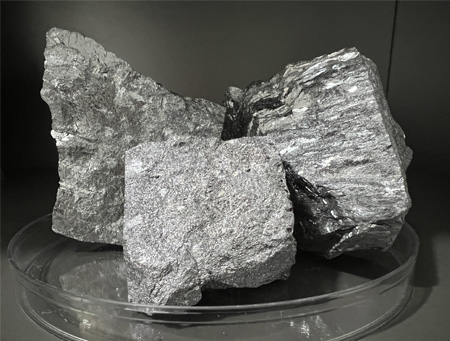
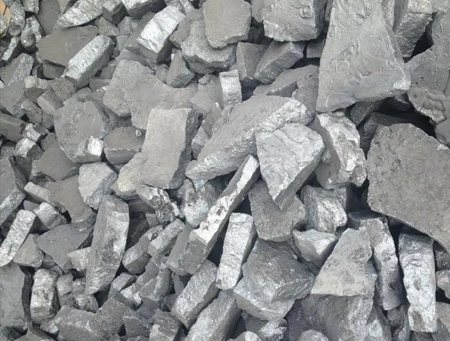
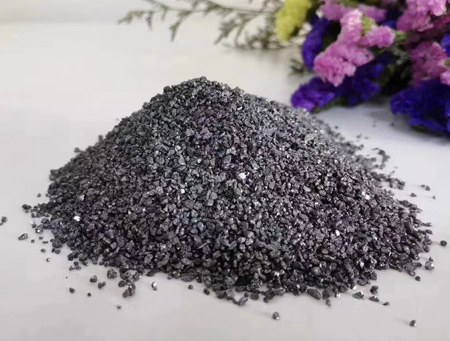
Calcium (Ca): 28%–30%
Silicon (Si): 50%–60%
Balance: Iron (Fe)
Trace elements: Al, C, P, S
Common grades include:
FeCa30Si60
FeCa28Si60
FeCa30Si55
FeCa28Si55
Available sizes:
Lump: 10–100 mm, 10–50 mm, 3–10 mm
Powder: 0–3 mm, 0–100 mesh
1. Deoxidizer and desulfurizer in steelmaking
2. Inoculant in the foundry industry
3. Raw material for calcium silicon cored wire production
The primary raw materials for CaSi production include high-purity lime (CaO), silica (SiO₂), and carbon-based reducing agents. Alternatively, the silicon in ferrosilicon can be used as a reducing agent in an electro-silicothermic process to produce lower-grade CaSi alloys.
Due to the high stability of CaO and SiO₂, and the tendency to form high-melting-point carbides (such as silicon carbide and calcium carbide) inside the furnace, these compounds often accumulate at the furnace bottom. This leads to a rising hearth and requires periodic shutdowns, making CaSi production more complex and challenging than ferrosilicon smelting.
1. One-Step Method (Mixed Charging Method)
Also known as the single-stage process, this method involves mixing and charging dried lime, silica, and carbonaceous reducing agents into a submerged arc furnace. Through operations such as furnace tamping, ventilation, and controlled smelting, calcium silicon alloy with approximately 55%–60% Si and 28%–31% Ca is produced.
2. Two-Step Method
In this process, high-quality lime (CaO ≥ 80%) and carbon materials are first used to produce calcium carbide (CaC₂) in one furnace. The CaC₂ is then cooled, crushed, and mixed with silica and additional reducing agents before being processed in a second furnace to produce calcium silicon alloy.
The main reaction is:
CaC₂ + 2SiO₂ + 2C → CaSi₂ + 4CO
This method prevents direct contact between CaO and SiO₂ during charging, solving issues related to low slag formation temperature and difficulty in increasing furnace temperature. It also minimizes carbide accumulation at the furnace bottom, enabling continuous production without frequent shutdowns.
3. Layered Charging Method
This method modifies the charging process within a single furnace to simulate the two-step method. By controlling the sequence of raw material addition, it reduces direct contact between CaO and SiO₂, preventing the formation of low-melting-point calcium silicate slag.
The process begins by producing low-gas calcium carbide inside the furnace without tapping it out. Silica is then added to react with the molten CaC₂, forming calcium silicon alloy. This approach reduces the need for excess carbon, minimizes silicon carbide formation, decreases carbide deposition at the furnace bottom, and extends the furnace campaign life.
Additionally, this method improves energy efficiency and lowers unit power consumption, making it a more advanced and cost-effective production technique.