Welcome to visit our factory !
Welcome to visit our factory !
Calcium Silicon Cored Wire is a metallurgical additive used in the steel refining process. It is manufactured using cored wire technology, where silicon-calcium alloy powder is encased in a cold-rolled low-carbon steel strip. This wire is fed into the molten steel through a wire feeding machine, enabling efficient metallurgical reactions.
The silicon-calcium alloy core typically contains 55-65% silicon (Si) and 28-29% calcium (Ca), with some products reaching calcium content as high as 30-32%.
The steel casing thickness typically ranges from 0.2-0.7mm, with common specifications being 0.4mm or 0.9-1mm. The edges are sealed using seamless, crimped, or welded methods to prevent moisture absorption and powder leakage.
Calcium Silicon Cored Wire (also referred to as CaSi Wire) performs dual functions of deoxidation and desulfurization. When added to molten steel, it purifies the steel by modifying the nature and morphology of inclusions, improving steel quality, and enhancing castability. It also helps to maintain temperature control and improve steel production efficiency.
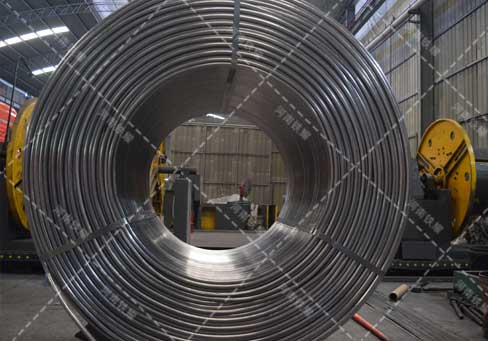
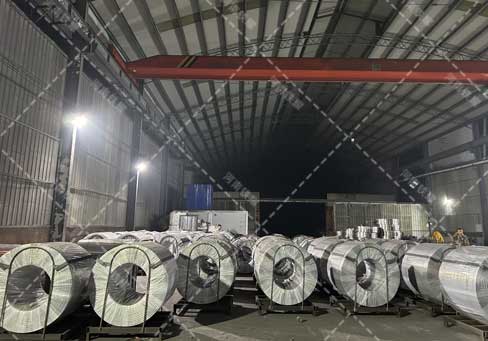
The use of Calcium Silicon Cored Wire is beneficial for adjusting and controlling the content of oxidizable and trace elements, significantly improving alloy recovery rates, reducing refining costs, shortening refining times, and controlling steel composition.
Industry Data from 2025:
High-quality calcium silicon wire can reduce calcium consumption to 0.45kg per ton of steel.
Application Results:
In the LF furnace refining process, feeding speed: 120 meters per minute
Feeding depth: 0.65-0.75 times the depth of the molten steel surface
Argon blowing strength: 1.5 liters per minute per ton of steel
Steel Mill Test Results:
Alloy absorption rate increased by 12%
Refining time reduced by 8-15 minutes
Steel cost reduced by 18-22 RMB per ton
After treatment, steel quality improves:
Oxide inclusions reduced by 37%
Sulfide inclusion spheroidization increased to 92%
Steel elongation improved by 5%-8%
Higher Alloy Recovery Rate:
Alloy element recovery rates increase by 10%-15%, significantly reducing production costs.
Dust-Free Process:
The feeding process eliminates dust pollution, improving the working environment.
Precise Control of Alloy Composition:
The process allows for precise control of alloy composition fluctuations (within ±0.01%), enhancing product quality stability.
For example, in a practical application at a steel mill, using the wire feeding machine reduced sulfur content in the steel from 0.015% to 0.005%, oxygen content from 30 ppm to 15 ppm, and increased the steel’s fatigue life by 20%.
Process Characteristics:
Wire Feeding Control:
The wire feeding speed can be adjusted continuously between 3-5 m/s, meeting the needs of different steel grades. Alloy content per unit length remains stable within ±3%, ensuring precise control over the amount added. Automation reduces human error.
Increased Alloy Recovery:
The deep deoxidation mode of the cored wire increases calcium recovery from 15-20% to 35-40%. The large contact area between the core powder and molten steel ensures full reaction, minimizing alloy waste. In one case, the silicon-calcium alloy consumption dropped from 3.2 kg/t to 2.1 kg/t, saving the steel mill 1.2 million RMB annually.
Feeding Depth and Speed:
Feeding Depth:
The depth should be sufficient to ensure the static pressure of the molten steel exceeds the vapor pressure of calcium, typically no less than 0.8 meters. For small steel ladles, the lower limit is used, while larger ladles use the upper limit to improve efficiency.
Feeding Speed:
The typical range is 150-300 meters per minute, with high-speed feeding reaching up to 1.2 m/s (72 meters per minute). Low-strength argon blowing is required to prevent splashing.
Unit Consumption:
The typical range is 0.4-0.8 kg per ton of steel. For instance, with a wire diameter of 5mm and a consumption of 1.3 kg/t, the feeding time is approximately 4-6 minutes at a speed of 1.2 m/s.
Post-Feeding Stirring:
A weak stirring process lasts for 6-15 minutes after feeding to facilitate the rise of inclusions. After feeding ends, continue to slowly stir with argon for about 3 minutes to prevent reoxidation.
Parameter Setting:
Set the feeding depth to 0.65H-0.75H of the steel bath depth and adjust the feeding speed starting from 200m/min.
Process Control:
Ensure that the weak stirring time is no less than 6 minutes after feeding. The endpoint can be automatically controlled by a program controller.
Equipment Matching:
Match the feeding speed with the capacity of the steel ladle. For large-capacity ladles (≥100t), a high-power feeding machine is required.
Safety Notice:
Ensure the feeding depth exceeds the calcium vapor pressure depth (approximately 0.8m) to prevent calcium evaporation.
As of January 30, 2026, the export price for Calcium Silicon Cored Wire (Ca30Si60∮13mm) is between $1270-$1300 per ton. The price for Calcium Silicon Wire (Ca28Si55∮13mm) is $1130-$1150 per ton, while the price for pure calcium cored wire (Ca98%min∮9mm Ca58-68g) is between $1460-$1530 per ton.